
QDAT.IO SPATIOTEMPORAL INTELLIGENCE AUTOMATION PLANE FOR BLOOD BAGS
Cooldat® and the Mass Transfer of Blood Products
Item-level cold-chain intelligence for safe, large-scale blood-product movement across regional health networks. Every unit carries its own temperature evidence — captured by an autonomous NuroVault and read with a handheld RFID reader running QDatDroid.
- •Item-level temperature logging on every unit
- •Handheld RFID scanning with QDatDroid
- •Predictive shelf-life ready data
THE CHALLENGE
Blood products are perishable, temperature-critical, and always in motion
A regional health network moves blood products constantly — between a central blood bank, hospital transfusion services, satellite clinics and operating rooms — through routine resupply, near-outdate redistribution, emergency surge transfers and returns to inventory. Every movement is a cold-chain risk, and each product class has a narrow, non-negotiable temperature window.
Blood product
Required temperature window
Covered by one NuroVault?
Blood productRed blood cells
Required temperature window1–6 °C stored; 2–10 °C surface in transport
Covered by one NuroVault?Yes
Blood productPlatelets
Required temperature window20–24 °C with continuous agitation
Covered by one NuroVault?Yes
Blood productFrozen plasma
Required temperature windowKept frozen at or below −25 °C
Covered by one NuroVault?Yes
The NuroVault operates from −35 °C to +35 °C — one device covers frozen, refrigerated and room-temperature products. Thresholds shown are indicative; deployments are configured to the network's governing standards (e.g. Héma-Québec, Canadian Blood Services, AABB).
Blood-product outdating is the single largest contributor to blood wastage.¹ When the chain is broken — or simply cannot be proven intact — units are discarded. The "30-minute rule" tells staff when a red-cell unit can no longer be transfused, but it cannot tell a receiving facility whether a transferred unit's cold chain actually held. The result is conservative, wasteful decisions: one four-site Canadian redistribution program lost 23% of redistributed units to transport failures — chiefly temperature-storage failures² — a loss rate later cut to 2.8% once temperature-controlled transport containers were validated and standardized.¹ Mass transfer at regional scale is only as safe as the evidence that travels with each unit.
WHAT COOLDAT® DOES
It makes every unit self-documenting
Cooldat® turns each blood product into an object that records and reports its own cold-chain history. A peel-and-stick NuroVault — a battery-printed RAIN RFID logging label — rides with the unit and measures temperature continuously, from the moment it leaves controlled storage to the moment it is received. It runs autonomously for up to three months, holds up to 4,096 logs that stay retrievable even after the battery is depleted, and can report an alarm state without downloading the full log. At every checkpoint, a handheld RFID reader running QDatDroid scans the tag and streams its data to the cloud, where the platform builds a per-item temperature timeline.
FLAGSHIP EVIDENCE — TIME ABOVE SET-POINT
End-to-end excursion evidence attached to every unit
Per-item temperature history with min/max set-points, alarms, and out-of-range intervals captured across the full journey — from controlled storage to the receiving facility.
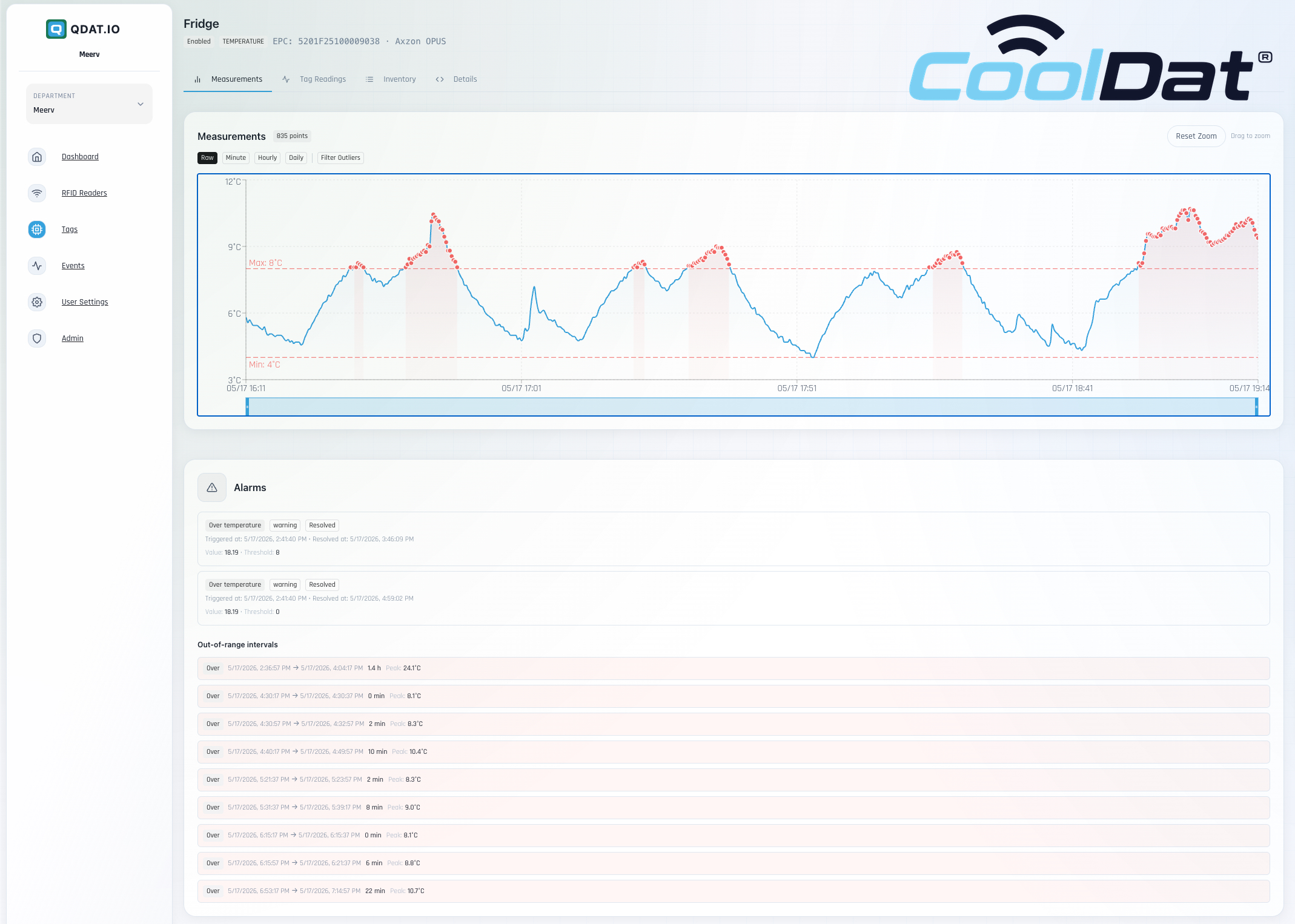
- •Per-item chart with min/max thresholds and highlighted excursions
- •Resolved-state alarms with trigger and resolution timestamps
- •Out-of-range intervals table: start, end, duration, and peak temperature
Product Demo
Cooldat® in action
HOW THIS ENABLES MASS TRANSFER PROTOCOLS
Across the network, units move on evidence — not assumption
By making each unit's cold-chain status machine-readable, Cooldat® lets a network operate a shared, regional blood inventory — units re-accepted on evidence rather than assumption, and routed to where they are needed before they expire. The approach is proven at scale: one Canadian provincial program redistributed 15,499 near-outdate blood products across 130 hospitals over eight years, preventing roughly $17.6M CAD in discards.¹
Transfer scenario
Without item-level evidence
With Cooldat®
Transfer scenarioRoutine resupply between sites
Without item-level evidenceTime-based rules and precautionary discards
With Cooldat®Per-unit proof of an unbroken chain on arrival
Transfer scenarioNear-outdate redistribution
Without item-level evidenceHigh transport-loss rates; viable units written off
With Cooldat®Receiving site re-accepts units backed by data
Transfer scenarioEmergency / surge transfers
Without item-level evidenceManual logs; no audit trail under pressure
With Cooldat®Automatic logging; alarms surfaced in real time
Transfer scenarioReturns to inventory
Without item-level evidence"30-minute rule" forces conservative discards
With Cooldat®Excursion table confirms whether a return is safe
THE CONTRIBUTORS
A data platform and an applied cold-chain product, working together
QDat.io
The intelligence plane
QDat.io provides the Spatiotemporal Intelligence Automation Plane (SIAP) — the cloud platform Cooldat® runs on. It ingests every tag, reader and operator scan over MQTT, stores it in a time-series backend, and exposes it through REST and Model Context Protocol (MCP) interfaces so dashboards, hospital systems and AI agents all act on the same data. Its predictive roadmap (QCoolDat predictive shelf life) points toward forecasting usable life per unit rather than relying on a fixed expiry date.
Cooldat®
The cold-chain product
Cooldat® is the applied solution — the CoolKit of NuroVaults, RFID tags, handheld Zebra readers, the QDatDroid reader app and the cloud backend. It is what physically accompanies each blood product and produces the evidence trail: the per-item timelines, timestamped alarms and excursion records that make a transfer defensible.
COOLKIT BUNDLE
What a deployment includes: the four-element CoolKit
ITEM 1
NuroVault
Tag profile
33 × 100 mm label with printed battery, programmable in a Zebra ZT411 RFID printer and armed on the handheld by QDatDroid.
Runtime
Up to 3 months autonomy with selectable logging intervals from seconds to hours.
Temperature range
−35 °C to +35 °C with up to 4,096 logs retrievable even after battery depletion.
Alarm behavior
Alarm state can be detected without downloading the full tag log.
Protocol
RAIN RFID.
Standard quantity
50 NuroVaults in the standard CoolKit.
Autonomous RFID Temperature Data Logger Label — Reference: Axzon Opus 5201 Datalogger
ITEM 2
Handheld RFID readers
Blood bank & transfusion service
Zebra RFD40 Premium handheld RFID sled paired with a mobile computer for high-throughput scanning.
Clinics & operating rooms
Zebra TC22R handheld touch computer with integrated RFID for point-of-care reads.
Coverage model
Handheld readers are carried to each checkpoint — receiving dock, refrigerator, OR — to scan every unit on arrival and dispatch.
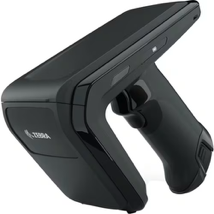 RFD40
RFD40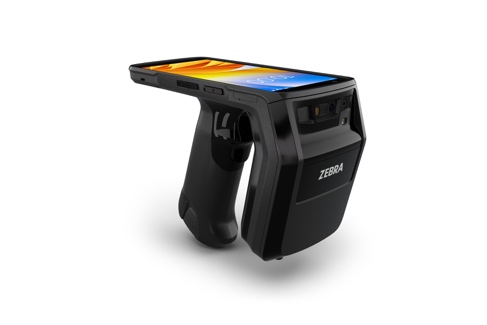 TC22R
TC22RITEM 3
Reader software: QDatDroid
Arming
Arm NuroVaults on the handheld with QDatDroid before each unit is dispatched.
Reading & streaming
Scan units at any checkpoint and stream NuroVault, EcoTag and MQTT alarm/event data with unlimited tag streams.
On-device review
View a unit's per-item temperature timeline and alarm state in the field — no backend access required.
QDatDroid
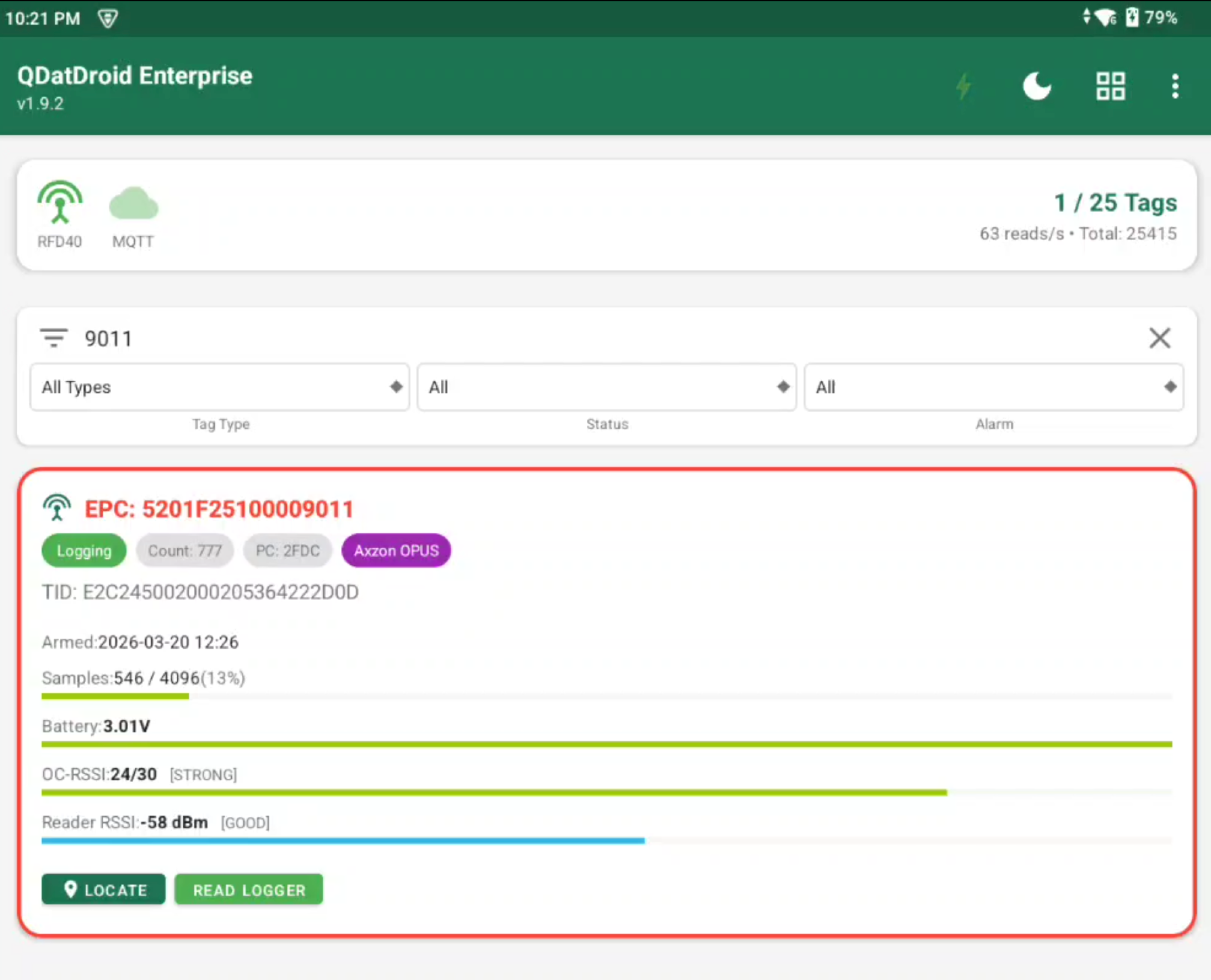
QDatDroid mobile tag list
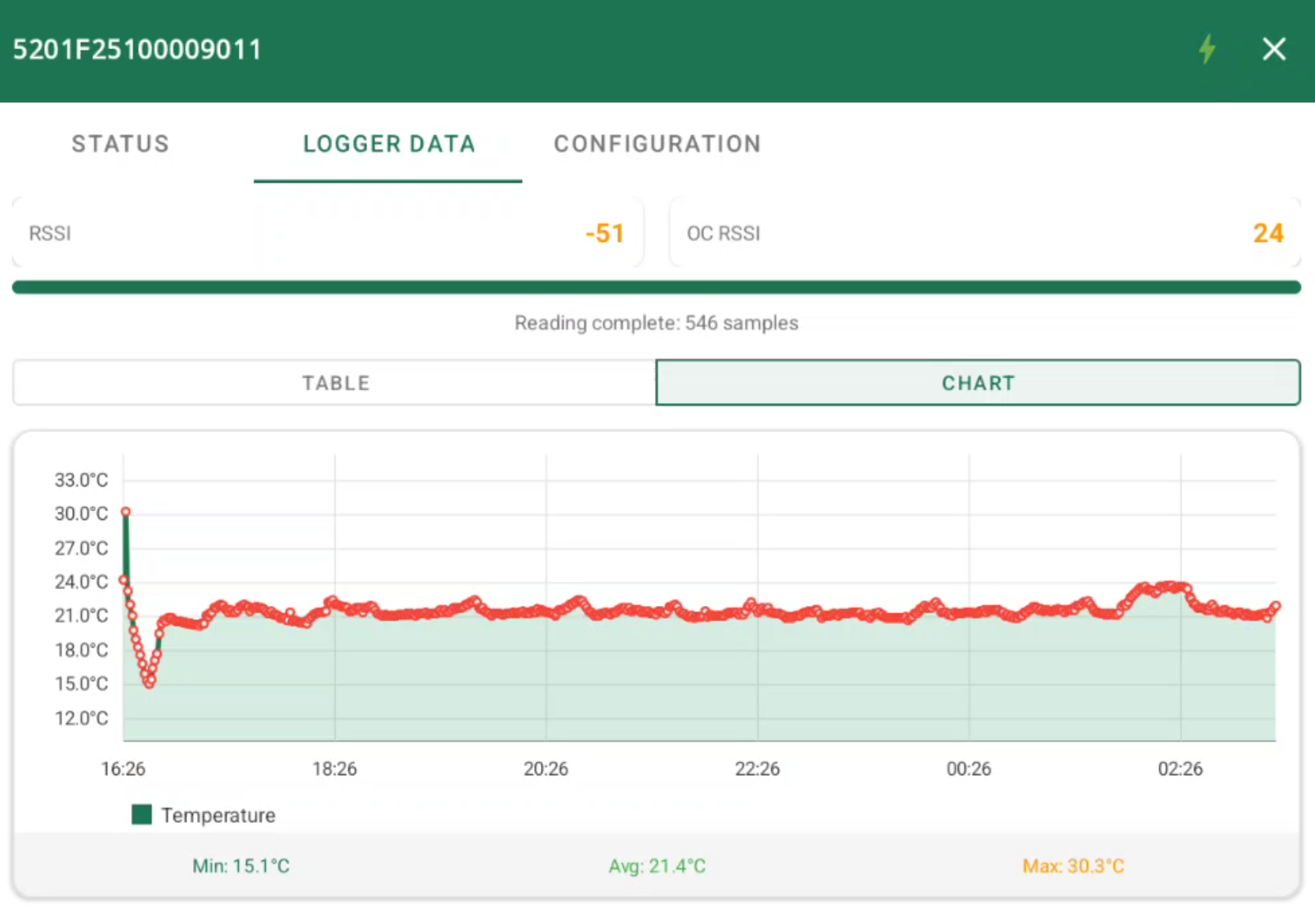
On-device temperature graph
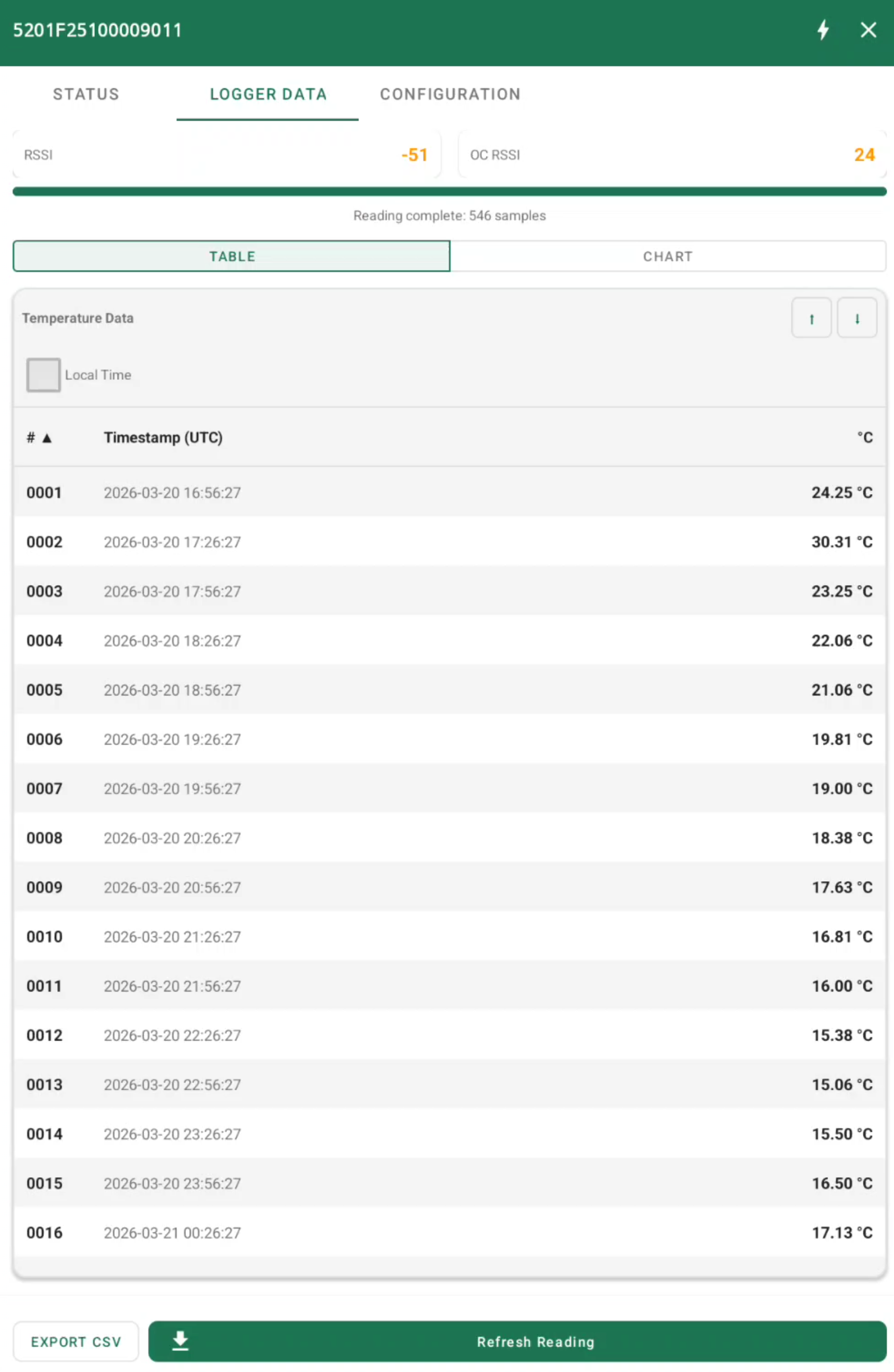
On-device sensor log table
ITEM 4
QDat.io Cloud Backend for Cooldat®
MQTT option 1
Cluster of Docker images under Kubernetes orchestration.
Database option 1
TimeScale DB Open Source
API
RESTful and MCP interfaces for integration with hospital systems and AI agents.
Optional AI roadmap
QCoolDat predictive shelf life — forecasting usable life per unit rather than relying on a fixed expiry date.
Discuss a Cooldat® cold-chain deployment
Book a demoWHY IT MATTERS FOR A REGIONAL HEALTH NETWORK
From a risk to be minimized into a routine, evidence-backed operation
Less waste
Fewer precautionary discards of units whose cold chain actually held.
More safety
No transfused unit relies on an unverified chain; every excursion is visible and timestamped.
More resilience
A region can pool and move blood products as a single inventory during shortages and surge events.
Together, QDat.io and Cooldat® reframe mass transfer from a risk to be minimized into a routine, evidence-backed operation.
REFERENCES
- 1Hajjaj OI, Modi D, Cameron T, et al. Reducing blood product wastage through the inter-hospital redistribution of near-outdate inventory. Transfusion. 2024;64(7):1207–1216. doi:10.1111/trf.17876
- 2Denesiuk L, Richardson T, Nahirniak S, Clarke G. Implementation of a redistribution system for near-outdate red blood cell units. Arch Pathol Lab Med. 2006;130(8):1178–1183.
Cooldat® is a Canadian registered trademark #1,412,371 of Meerv Inc. QDat.io is a brand of Meerv Inc., Québec, Canada. Learn more at qdat.io/mtp · hello@qdat.io